
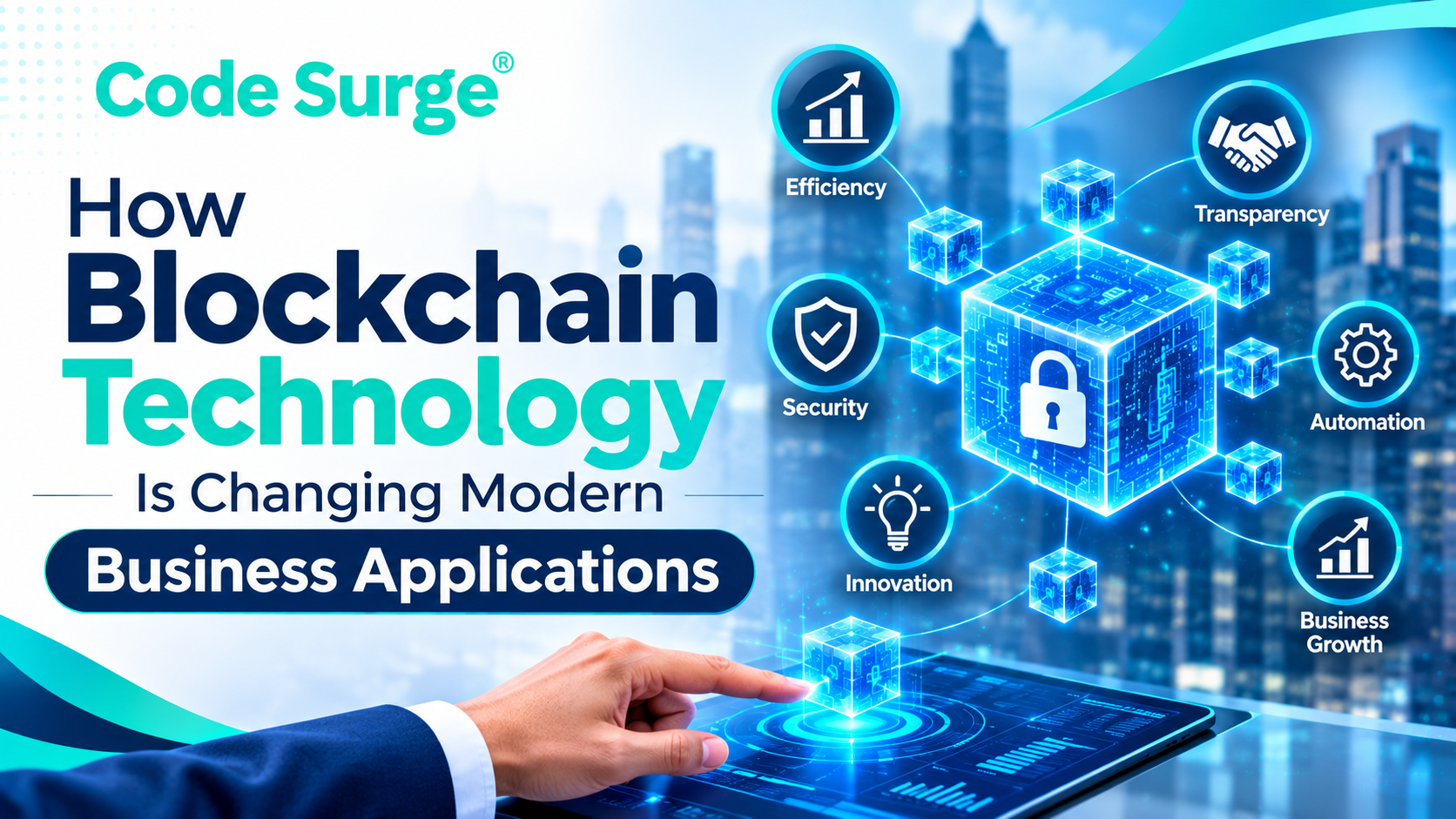
Blockchain technology is moving beyond its early association with cryptocurrency and becoming a practical technology for businesses looking to improve transparency, security, automation and digital trust.
From financial services and supply chain management to digital identity, asset tokenization and decentralized applications, blockchain applications are creating new ways for businesses to manage information and transactions.
For companies exploring digital transformation, the important question is no longer simply “What is blockchain?” but rather “Where can blockchain technology create real business value?”
In this article, we explore how blockchain technology is changing modern business applications, the most relevant business use cases, and what companies should consider before investing in a blockchain solution.
What Is Blockchain Technology?
Blockchain is a type of distributed digital ledger that records transactions or data across a network rather than relying on a single centralized database.
Once information is recorded and validated according to the network's rules, it can be difficult to alter without detection. This creates a verifiable record that can be shared between authorized participants.
Unlike a traditional database that is generally controlled by one organization, blockchain can allow multiple parties to interact with a shared record while reducing the need for a single intermediary.
The technology is commonly associated with:
-
Decentralized networks
-
Smart contracts
-
Digital assets
-
Cryptocurrencies
-
Decentralized applications (dApps)
-
Tokenization
-
Enterprise blockchain
-
Secure digital records
-
Web3 applications
However, blockchain is not automatically the best solution for every business problem. The real value comes from identifying situations where shared trust, traceability, automation or tamper-resistant records are important.
Why Are Businesses Exploring Blockchain Applications?
Modern businesses manage large amounts of data and transactions involving customers, suppliers, financial institutions, partners and other stakeholders.
Traditional systems can sometimes create challenges when multiple organizations need to share and verify the same information.
Blockchain can provide a shared and verifiable record that helps businesses address specific problems involving:
1. Transparency
Blockchain can provide participants with a consistent record of transactions and activities.
For example, businesses operating complex supply chains can use blockchain-based systems to record the movement of products between different stages.
This can make it easier for authorized participants to verify where information came from and how it changed over time.
2. Data Integrity
Blockchain's cryptographic structure can make unauthorized modification of recorded information more difficult to hide.
This can be useful for applications where maintaining a trustworthy transaction history is important.
3. Automation
One of the most important blockchain business applications is smart contract development.
Smart contracts are programs deployed on blockchain networks that can automatically execute predefined actions when specified conditions are met.
For example, a smart contract could automate a payment after certain conditions in a business process have been fulfilled.
This can reduce manual processing and make workflows more efficient.
4. Reduced Dependence on Intermediaries
Some blockchain applications allow multiple parties to interact directly through a shared network.
Depending on the use case, this can reduce the need for certain intermediaries and simplify transaction processes.
The potential benefit depends heavily on the business model, regulations, technology architecture and participants involved.
5. Digital Ownership
Blockchain can also support the creation and management of digital assets.
Through tokenization, businesses can represent certain assets or rights digitally on a blockchain network.
This is creating opportunities across areas such as digital collectibles, loyalty programs, financial applications, gaming and other Web3 ecosystems.
7 Blockchain Applications Changing Modern Businesses
Blockchain technology can be applied in many different ways. The following are some of the most relevant blockchain use cases for businesses.
1. Supply Chain Management
Supply chains often involve manufacturers, suppliers, logistics companies, distributors and retailers.
When information is stored across different systems, verifying product history can become complicated.
A blockchain-based supply chain solution can create a shared record of important events such as:
-
Product origin
-
Manufacturing
-
Shipment
-
Delivery
-
Ownership transfers
-
Quality checks
-
Product verification
This can improve traceability and help businesses create more reliable records throughout the supply chain.
2. Financial Services and Payments
Financial services are another area where blockchain technology is being actively explored.
Blockchain-based applications can support areas such as:
-
Digital payments
-
Asset settlement
-
Transaction tracking
-
Tokenized assets
-
Digital currencies
-
Cross-border transactions
-
Automated financial agreements
The European Central Bank, for example, launched its Pontes service in September 2026 to connect its payment system with blockchain-based financial markets, demonstrating how blockchain infrastructure is being explored within institutional financial systems.
However, financial blockchain applications also require careful consideration of security, compliance and regulatory requirements.
3. Smart Contracts
Smart contracts are one of the most important components of modern blockchain development.
Instead of relying entirely on manual processes, businesses can encode predefined rules into blockchain-based applications.
For example:
Condition met → Smart contract executes → Transaction recorded
This approach can support business processes involving payments, digital assets, agreements, access permissions and automated transactions.
Code Surge's blockchain development offering includes smart contract development and auditing, with technologies such as Solidity and Rust.
4. Decentralized Applications (dApps)
A decentralized application, commonly called a dApp, uses blockchain infrastructure as part of its underlying technology.
Unlike conventional applications that rely primarily on centralized databases and servers, dApps can use blockchain networks for transactions, digital ownership, identity or other decentralized functions.
Businesses can explore dApp development for areas such as:
-
Decentralized marketplaces
-
Financial applications
-
Digital asset platforms
-
Web3 communities
-
Gaming ecosystems
-
Digital ownership systems
As blockchain adoption develops, businesses are increasingly evaluating dApps based on specific use cases rather than simply adopting blockchain because it is a popular technology.
5. Digital Identity and Verification
Digital identity is another potential blockchain application.
Businesses and organizations need reliable ways to verify users, credentials and transactions.
Blockchain-based identity systems can potentially provide verifiable records while giving users greater control over certain digital credentials.
This can be relevant to industries where identity verification, authentication and data integrity are important.
6. Asset Tokenization
Tokenization involves representing an asset, ownership right or other value digitally using blockchain technology.
Depending on the use case, businesses can explore tokenization for:
-
Digital assets
-
Loyalty programs
-
Real-world assets
-
Digital collectibles
-
Memberships
-
Gaming assets
-
Intellectual property
Code Surge's blockchain service specifically includes tokenization and NFT ecosystems, including ERC-20, ERC-721 and ERC-1155 token standards.
7. Enterprise Blockchain Solutions
Not every organization needs a public blockchain.
Businesses dealing with sensitive information or operating within a controlled group of organizations may consider private or permissioned blockchain networks.
Enterprise blockchain solutions can be explored for applications such as:
-
Supply chain tracking
-
Financial records
-
Business-to-business transactions
-
Asset tracking
-
Data verification
-
Internal workflow management
Code Surge's current blockchain offering includes enterprise private ledger development using technologies such as Hyperledger Fabric and Corda.
Blockchain vs Traditional Databases: Which Is Better?
Blockchain is not designed to replace every traditional database.
A conventional database may be more appropriate when a business needs:
-
High-speed centralized data processing
-
Simple internal data management
-
Full control by one organization
-
Low-cost storage for large datasets
-
Conventional CRUD-based applications
Blockchain can be more relevant when a business needs:
-
Shared records between multiple parties
-
Greater transaction traceability
-
Tamper-resistant records
-
Decentralized ownership
-
Smart contract automation
-
Digital asset management
-
Reduced reliance on a central authority
The right architecture depends on the business requirements.
A professional blockchain development company should first evaluate whether blockchain actually solves the problem before recommending a blockchain implementation.
What Should Businesses Consider Before Blockchain Development?
Blockchain development involves more than choosing a network and writing smart contracts.
Before starting a project, businesses should consider several factors.
Business Use Case
First, identify the actual business problem.
If a conventional database can solve the problem efficiently, blockchain may not provide enough additional value to justify the complexity.
Blockchain Network
Different blockchain networks have different characteristics.
Factors such as transaction speed, fees, ecosystem support, security, scalability and development requirements should be considered when selecting a network.
Code Surge currently works with blockchain ecosystems including Ethereum and its Layer 2 networks, Solana, Polkadot and Binance Smart Chain.
Smart Contract Security
Smart contracts can contain vulnerabilities even when the underlying blockchain network is secure.
Security testing, code review and auditing should therefore be an important part of the development process.
Scalability
Businesses should consider how the application will perform as the number of users and transactions increases.
Layer 2 solutions and optimized smart contracts can be considered for applications where transaction costs and scalability are important.
Regulatory and Compliance Requirements
Blockchain applications involving financial transactions, digital assets, personal information or regulated industries may have additional legal and compliance considerations.
These requirements should be reviewed before development begins.
The Future of Blockchain Technology in Business
The future of blockchain development is increasingly focused on practical business applications rather than technology for its own sake.
Current enterprise use cases include financial infrastructure, supply chain traceability, tokenization, digital assets and decentralized applications. Industry coverage in 2026 also shows blockchain being applied beyond cryptocurrency across areas such as finance, healthcare, logistics and media.
For businesses, the opportunity is not simply to “use blockchain.”
The opportunity is to identify specific processes where transparency, verification, automation, digital ownership or shared trust can create measurable value.
As blockchain infrastructure continues to mature, businesses that evaluate these use cases carefully can determine where decentralized technology fits into their broader digital strategy.
Why Choose Code Surge for Blockchain Development?
Choosing the right technology partner is an important part of building a secure and scalable blockchain application.
Code Surge provides blockchain development solutions focused on decentralized applications, smart contracts, private ledgers and tokenization.
The company's blockchain development capabilities include smart contract development and auditing, custom dApp development, enterprise private ledgers and tokenization solutions.
You can learn more about the company's technology capabilities through the Code Surge technology section, or learn more about the company on the Code Surge About page.
If your business is evaluating whether blockchain is suitable for a new application, the first step should be understanding the business requirement, technical architecture and expected outcome.
You can contact Code Surge to discuss your blockchain development requirements.
For more information about the company's blockchain solutions, visit the Code Surge Blockchain Development page.
Frequently Asked Questions About Blockchain Technology
What is blockchain technology used for in business?
Blockchain technology can be used for applications involving secure transaction records, supply chain traceability, smart contracts, digital assets, tokenization, decentralized applications and shared data between multiple organizations.
How can blockchain help businesses?
Depending on the use case, blockchain can help businesses improve transparency, automate processes, strengthen transaction traceability and create digital ownership systems.
What is blockchain development?
Blockchain development involves designing and building applications that use blockchain networks. This can include smart contracts, decentralized applications, private blockchain networks, tokenization systems and blockchain integrations.
What are smart contracts?
Smart contracts are blockchain-based programs that automatically execute predefined actions when specified conditions are met.
Is blockchain suitable for every business?
No. Blockchain is not the right solution for every application. Businesses should first evaluate whether decentralization, shared trust, traceability or smart contract automation provides a meaningful advantage over conventional technologies.
What is a dApp?
A dApp, or decentralized application, is an application that uses blockchain technology as part of its underlying infrastructure, often for transactions, digital assets, ownership or decentralized functionality.
What is enterprise blockchain?
Enterprise blockchain refers to blockchain solutions designed for business environments. These can include permissioned networks used by organizations or groups of organizations to share and verify information.
What is blockchain development in Sri Lanka?
Blockchain development in Sri Lanka refers to building blockchain-based applications and solutions for Sri Lankan businesses and organizations, including smart contracts, Web3 applications, digital assets and enterprise blockchain systems.
Conclusion
Blockchain technology is changing how businesses think about trust, transactions, automation and digital ownership.
From smart contract development and decentralized applications to supply chain management, enterprise blockchain and tokenization, the technology has applications that extend far beyond cryptocurrency.
The most successful blockchain projects will not necessarily be the ones using the newest technology. They will be the ones solving a clear business problem with the right architecture, security approach and implementation strategy.
If your business is exploring blockchain development, Web3 applications or enterprise blockchain solutions, start by identifying the process you want to improve and then evaluate whether blockchain is the right technology for that specific requirement.
Explore Code Surge's Blockchain Development Services or contact the Code Surge team to discuss your project.