
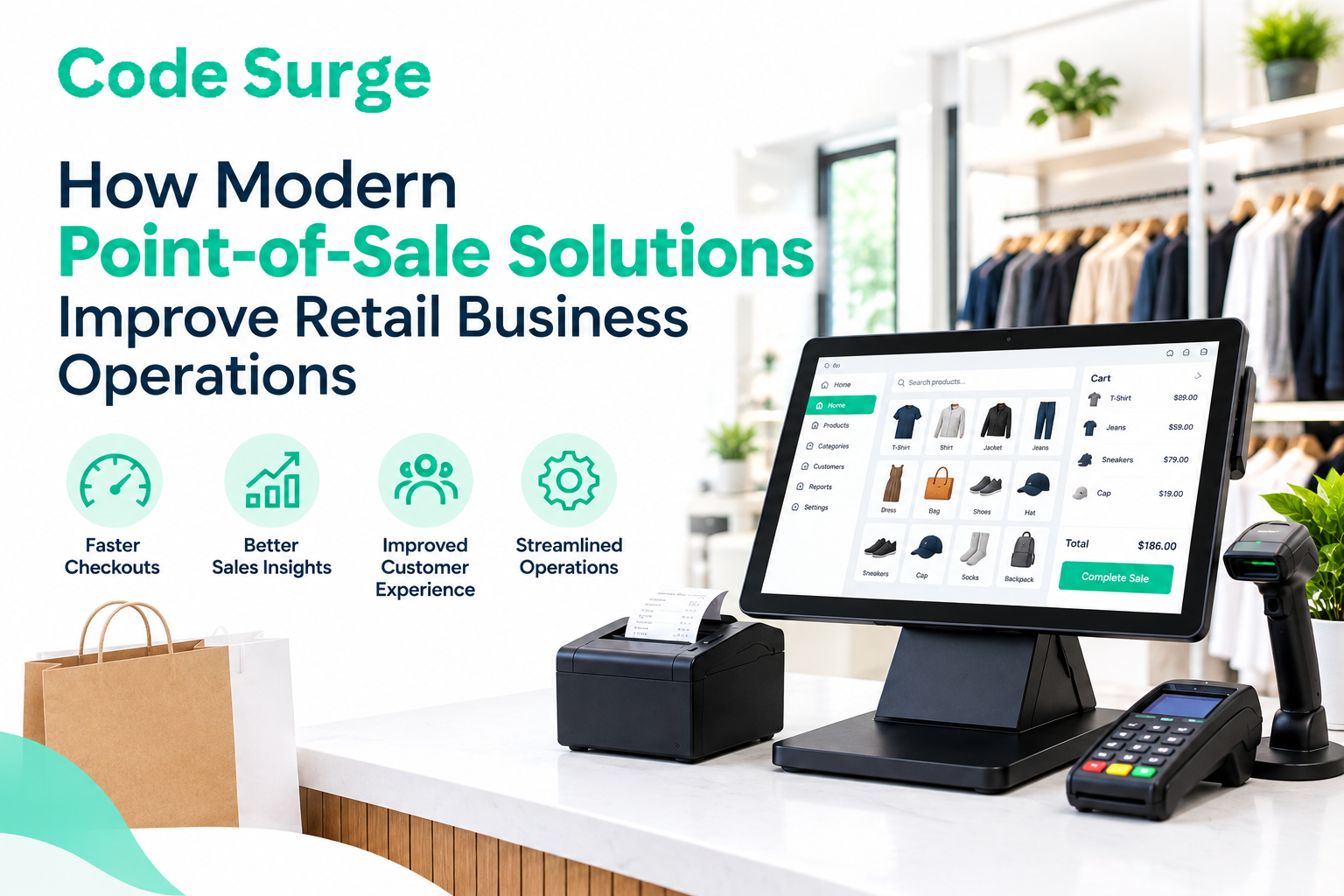
How Modern Point-of-Sale Solutions Improve Retail Business Operations
Running a retail business involves much more than simply selling products. Retailers need to manage sales, inventory, customer information, employees, payments, reporting and day-to-day operations while delivering a smooth customer experience.
For many businesses, managing these activities manually or using disconnected systems can lead to inaccurate stock records, slow billing, reporting difficulties and unnecessary administrative work.
This is where a modern point-of-sale (POS) system can make a significant difference.
A modern POS solution is no longer just a digital cash register. It can connect sales, inventory, payments, customer information and business reporting through a centralized system, helping retail businesses operate more efficiently and make better decisions.
For businesses looking for a POS system in Sri Lanka, understanding how modern POS technology can improve daily operations is an important first step.
What Is a Point-of-Sale System?
A point-of-sale system is a combination of software and hardware used to process customer transactions and manage sales-related information.
Traditional cash registers mainly record transactions. Modern POS software can go much further by connecting the sales counter with inventory management, reporting, customer management and other business processes.
Depending on the business requirements, a modern retail POS system can help manage:
-
Sales and billing
-
Product and inventory management
-
Barcode scanning
-
Payment recording
-
Customer information
-
Discounts and promotions
-
Employee and cashier activity
-
Sales reports
-
Stock reports
-
Multi-branch operations
-
Business performance data
This makes a POS system an important part of modern retail management software.
Why Are Modern POS Solutions Important for Retail Businesses?
Retail businesses handle large numbers of transactions and products every day. Even small errors in billing, stock management or reporting can create operational problems.
A modern POS solution can centralize important business information and reduce the amount of manual work required to manage daily operations.
Here are some of the key ways a POS system can help improve retail business operations.
1. Faster and More Accurate Billing
One of the most visible benefits of a modern POS system is faster checkout.
Instead of manually entering product information and calculating prices, employees can use barcode scanning or product search to add items to a transaction.
The system can automatically calculate:
-
Product prices
-
Quantities
-
Discounts
-
Taxes where applicable
-
Total transaction value
-
Payment amounts
This can reduce manual calculation errors and help employees process transactions more efficiently.
For busy retail stores, faster billing can also help reduce queues and create a smoother customer experience.
2. Better Inventory Management
Inventory management is one of the biggest challenges for many retail businesses.
When stock is tracked manually, it can be difficult to know exactly how many products are available at any given time. This can result in overstocking, stock shortages or inaccurate inventory records.
A modern retail POS system can connect sales transactions with inventory records.
When a product is sold, the system can update the available stock based on the transaction.
This gives businesses better visibility into:
-
Current stock levels
-
Fast-moving products
-
Slow-moving products
-
Low-stock items
-
Product sales history
-
Stock movements
-
Inventory trends
Better inventory visibility allows business owners and managers to make more informed purchasing and stocking decisions.
3. Real-Time Sales Information
Retail business owners need to understand what is happening in their stores.
A modern POS system can provide sales information that helps answer questions such as:
-
Which products are selling the most?
-
Which products are generating the most sales?
-
What are the daily sales figures?
-
Which periods have the highest sales?
-
Which branches are performing better?
-
How are different product categories performing?
Instead of waiting until the end of the day to manually calculate sales, managers can access organized sales information through the POS system.
This makes sales management more efficient and data-driven.
4. Improved Business Reporting
Business decisions become easier when managers have access to accurate information.
Modern POS software can generate different types of reports based on the information recorded through the system.
Depending on the POS solution, reports may include:
-
Daily sales reports
-
Product sales reports
-
Inventory reports
-
Cashier reports
-
Customer reports
-
Payment reports
-
Profit-related reports
-
Branch performance reports
These reports can help business owners understand operational performance and identify areas that may need attention.
5. Better Customer Experience
Customer experience is an important part of retail success.
Long queues, slow billing and incorrect invoices can negatively affect the shopping experience.
A modern point-of-sale system can help businesses provide faster and more accurate checkout experiences.
POS software can also support customer-related features such as:
-
Customer records
-
Purchase history
-
Loyalty programmes
-
Discounts
-
Promotional offers
-
Digital receipts
By having better access to customer and transaction information, businesses can create more organized customer experiences.
6. Reduced Manual Work
Many retail businesses still rely on spreadsheets, notebooks or separate systems to manage different parts of their operations.
This can create duplicated work.
For example, an employee may need to:
-
Record a sale manually.
-
Update the stock spreadsheet.
-
Calculate the day's sales.
-
Prepare a separate report.
-
Check inventory again at the end of the day.
A centralized POS solution can automate many of these activities.
When a transaction is completed, relevant information can be recorded in the system automatically.
This can save employee time and allow staff to focus more on customers and other important business activities.
7. Better Control Over Employee and Cashier Activities
Retail businesses often have multiple employees handling sales transactions.
A POS system can provide better visibility into cashier activity by recording transactions under individual user accounts or employee profiles.
Depending on the system, managers may be able to monitor:
-
Sales by cashier
-
Transactions
-
Discounts
-
Refunds
-
Voided transactions
-
Shift activity
-
Cash reconciliation
This can improve operational accountability and give managers better visibility into daily store activities.
8. Support for Multiple Retail Locations
Managing several branches can become increasingly complicated as a retail business grows.
Without a centralized system, business owners may need to collect information separately from each location.
A modern POS solution can help connect multiple stores or branches to a centralized management environment.
This can make it easier to monitor:
-
Branch sales
-
Stock levels
-
Product performance
-
Employee activity
-
Inventory movement
-
Overall business performance
For growing retailers, this type of centralized visibility can support more efficient multi-branch management.
9. Better Stock Planning and Purchasing Decisions
Knowing what has sold in the past can help businesses make better decisions about future inventory.
For example, sales data can help identify products that consistently sell quickly and products that remain in stock for longer periods.
Retailers can use this information to improve:
-
Reordering decisions
-
Stock allocation
-
Product purchasing
-
Promotional planning
-
Inventory turnover
-
Seasonal stock planning
Instead of relying only on assumptions, business owners can use historical sales data to support their decisions.
10. Easier Business Growth and Automation
As a retail business grows, managing operations manually becomes more difficult.
More products, employees, customers and branches mean more information needs to be managed.
A scalable POS system can provide a foundation for retail automation by connecting different parts of the business.
Depending on the solution, POS software can also integrate with other business technologies, such as accounting systems, e-commerce platforms, payment solutions and customer management tools.
This allows businesses to build a more connected technology environment as they grow.
What Should Businesses Look for in a POS System?
Choosing the right POS solution depends on the business model, number of products, transaction volume and future growth plans.
Before selecting a POS system in Sri Lanka, businesses should consider important features such as:
Inventory Management
The system should provide accurate information about product quantities, stock movements and inventory levels.
Fast Billing
The checkout process should be simple and efficient for employees.
Reporting and Analytics
Business owners should be able to access useful sales and operational reports.
User Management
The system should allow businesses to manage employees and control access where required.
Scalability
The solution should be capable of supporting business growth, additional products or multiple locations.
Integration
Businesses should consider whether the POS can integrate with other systems they already use or may need in the future.
Security and Data Management
Sales and business information should be handled securely, with appropriate access controls and data protection measures.
POS System vs Traditional Cash Register
A traditional cash register mainly focuses on recording transactions.
A modern POS system can connect the checkout process with broader business operations.
|
Traditional Cash Register |
Modern POS System |
|
Basic transaction recording |
Advanced sales management |
|
Limited reporting |
Detailed business reports |
|
Manual stock tracking |
Integrated inventory management |
|
Limited customer information |
Customer management capabilities |
|
Basic checkout |
Barcode-enabled and streamlined billing |
|
Limited business insights |
Sales and operational analytics |
|
Difficult to scale |
Can support growing businesses |
This difference is why many modern retailers consider POS software as part of their broader business management and retail automation strategy rather than simply a replacement for a cash register.
How POS Solutions Support Digital Transformation in Retail
Digital transformation is changing how businesses manage their operations.
For retailers, adopting a POS system can be one part of a broader digital transformation strategy.
When sales, inventory and reporting are managed digitally, businesses can reduce manual processes and gain better access to operational information.
This can create a more connected retail environment where business owners can make decisions using actual sales and inventory data.
For Sri Lankan businesses, selecting technology that fits their specific operational requirements is particularly important. A POS solution should not only process transactions but should also support the way the business operates today while allowing room for future growth.
Is a POS System Suitable for Small Retail Businesses?
A POS system is not only useful for large supermarkets or multi-branch retailers.
Small and growing businesses can also benefit from organized sales, inventory and reporting processes.
A POS solution can be useful for businesses such as:
-
Grocery stores
-
Clothing shops
-
Electronics stores
-
Pharmacies
-
Hardware stores
-
Supermarkets
-
Gift shops
-
Beauty and cosmetics retailers
-
Bookshops
-
Specialty retail stores
The right solution depends on the size and operational requirements of each business.
Why Choose a Customized POS Solution?
Every retail business operates differently.
A small shop may have different requirements from a supermarket or a multi-branch retail company.
A customized POS solution can be designed around a business's specific workflows, product structures, reporting requirements and future plans.
Instead of forcing a business to change its entire workflow to fit generic software, a customized solution can be developed around the business's operational requirements.
Businesses looking for technology solutions can explore [Code Surge's Point-of-Sale Solutions] as part of their digital transformation strategy.
How Code Surge Can Help With Point-of-Sale Solutions
Implementing a POS system is not simply about installing billing software. Businesses need to consider their sales processes, inventory requirements, reporting needs, integrations, scalability and user requirements.
Code Surge provides technology solutions designed to help businesses improve their digital operations.
You can learn more about the company on the [Code Surge], explore its [technology and development capabilities], or learn more about the team through the [About Code Surge] .
If your business is considering a new POS solution or wants to improve its existing retail technology infrastructure, you can [contact Code Surge] to discuss your requirements.
Final Thoughts
Modern point-of-sale solutions can do much more than process customer payments.
From faster billing and inventory management to sales reporting, employee management and multi-branch visibility, POS software can help retailers create more organized and efficient business operations.
For Sri Lankan retail businesses looking to reduce manual work, improve operational visibility and prepare for future growth, investing in the right POS system can be an important step toward digital transformation.
The key is to choose a solution that fits the current business requirements while providing the flexibility to grow with the business.
Frequently Asked Questions
What is a POS system?
A POS system, or point-of-sale system, is software and hardware used to process sales transactions and manage related business information such as inventory, payments and reports.
What is a retail POS system?
A retail POS system is designed specifically to help retail businesses manage activities such as billing, product sales, inventory, customer information and reporting.
How does a POS system improve inventory management?
A POS system can connect sales transactions with inventory records, allowing businesses to track stock levels and understand product movement more efficiently.
Can small businesses use POS software?
Yes. POS software can be used by small retail businesses as well as larger stores and multi-branch businesses. The appropriate solution depends on the business's size and requirements.
What should I consider when choosing a POS system in Sri Lanka?
Businesses should consider features such as billing speed, inventory management, reporting, security, user management, scalability, integrations and ongoing technical support.
Can a POS system support multiple branches?
Many modern POS solutions can support multiple locations, allowing businesses to manage sales, inventory and reporting across different branches from a centralized system.
Is a POS system only used for billing?
No. Modern POS systems can support inventory management, sales reporting, customer management, employee management, promotions and other retail operations in addition to billing.