
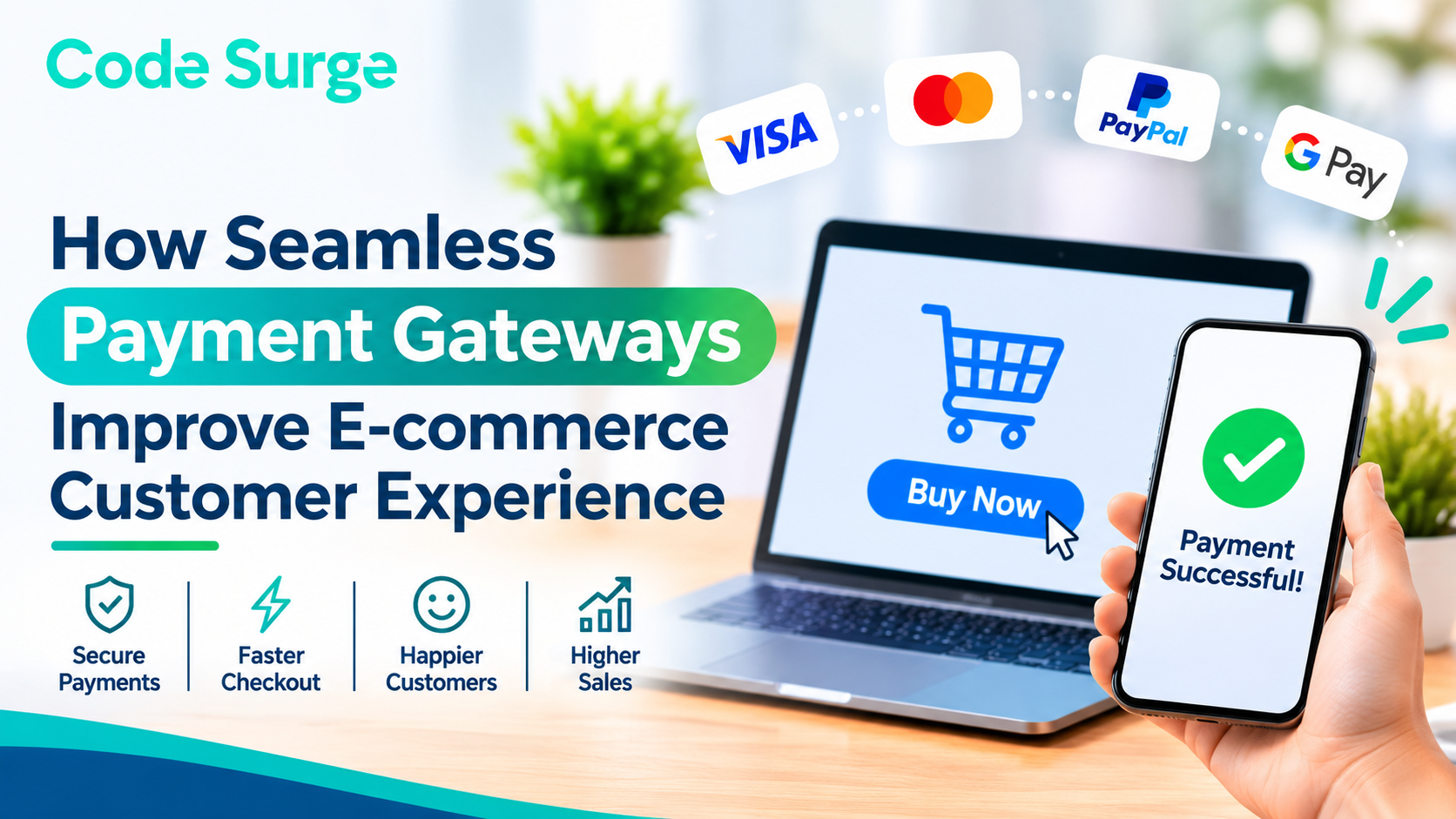
For an e-commerce business, getting customers to your website is only part of the challenge. The next step is making it easy for them to complete their purchase.
A slow checkout, confusing payment process, limited payment methods, or failed transaction can cause customers to abandon their carts even after they have decided to buy. This is why payment gateway integration has become an important part of modern e-commerce website development.
A well-integrated e-commerce payment gateway connects your online store with secure payment processing systems and gives customers a smoother way to complete transactions. For Sri Lankan businesses, choosing the right payment solution can also help support local payment preferences while creating a better experience for customers shopping online.
In this article, we’ll explore how seamless payment gateway integration can improve the e-commerce customer experience and what businesses should consider when developing or improving their online checkout.
What Is a Payment Gateway?
A payment gateway is a technology that helps an e-commerce website securely process online payments.
When a customer places an order, the payment gateway connects the website, payment processor, and relevant financial institution to process the transaction. Depending on the solution and merchant setup, customers may be able to pay using cards, digital payment methods, QR-based payments, or other supported payment options.
For an online business, payment gateway integration is more than simply adding a “Pay Now” button. It needs to work correctly with the shopping cart, order management system, payment confirmation, refunds, and other parts of the website.
This is why businesses should consider payment processing as an important part of the overall e-commerce website development strategy.
Why Payment Experience Matters in E-commerce
Customers expect online shopping to be fast, simple, and secure.
If a customer has successfully found a product, added it to the cart, entered their details, and then faces a complicated payment process, there is a risk that they will leave before completing the order.
A smooth payment experience can help reduce unnecessary friction during the final stage of the customer journey.
For example, customers may expect:
-
A simple checkout process
-
Clear payment instructions
-
Mobile-friendly payment pages
-
Multiple suitable payment methods
-
Secure transaction processing
-
Fast payment confirmation
-
Clear error messages when a payment fails
-
Easy access to order confirmation
-
A reliable process for refunds or payment issues
A payment gateway therefore affects more than the transaction itself. It can influence the overall perception customers have of an online store.
1. Faster and Simpler Checkout
One of the biggest benefits of a seamless payment gateway is a smoother checkout experience.
Customers don't want to spend unnecessary time filling out forms or navigating through multiple confusing pages before completing a purchase.
A properly designed payment flow can reduce unnecessary steps and help customers move from their shopping cart to payment confirmation more efficiently.
For businesses, this means payment gateway integration should be considered alongside checkout optimization and website UX rather than treated as a separate technical feature.
A well-designed checkout should make it immediately clear:
What am I buying? → How much am I paying? → How can I pay? → Is my payment complete?
The simpler this journey is, the easier it is for customers to complete their orders.
2. Supports Multiple Payment Methods
Different customers prefer different ways to pay.
Some customers may prefer debit or credit cards, while others may use digital wallets, QR payments, online banking, or other available payment methods.
Providing appropriate payment options can make an online store more convenient for a wider range of customers.
For Sri Lankan e-commerce businesses, local payment preferences are particularly important. Current payment solutions available in Sri Lanka include card payments, LankaQR and various digital payment or wallet-based options, although availability varies between providers.
Instead of assuming that every customer wants to pay in the same way, businesses should evaluate which payment methods are most relevant to their target audience.
3. Creates a More Trustworthy Checkout Experience
Trust is extremely important when customers are entering payment information online.
A professional checkout experience should communicate that the transaction is being handled securely and that the business has considered customer privacy and payment protection.
Security should therefore be part of the payment gateway selection and integration process.
Businesses should also make sure their websites clearly communicate important information such as:
-
Business contact details
-
Privacy policies
-
Terms and conditions
-
Refund or return policies
-
Order information
-
Secure payment processes
A trustworthy website combined with a reliable payment process can give customers greater confidence when completing an online purchase.
4. Improves the Mobile Shopping Experience
A large percentage of online shopping activity now happens through mobile devices.
This means a payment process that works well on a desktop computer but becomes difficult to use on a smartphone can create unnecessary friction.
A mobile-friendly payment experience should have:
-
Responsive design
-
Easy-to-use form fields
-
Clear buttons
-
Simple navigation
-
Fast loading
-
Minimal unnecessary steps
-
Clear payment confirmation
Payment gateway integration should therefore be tested across different screen sizes and devices before an e-commerce website goes live.
For businesses investing in web development, mobile checkout should be treated as an essential part of the customer journey rather than an optional feature.
5. Helps Reduce Checkout Abandonment
Cart abandonment is one of the major challenges faced by e-commerce businesses.
Customers can abandon their carts for many reasons, including unexpected costs, complicated checkout processes, lack of preferred payment methods, technical problems, or concerns about payment security.
Not every abandoned cart is caused by the payment gateway itself. However, payment is one of the most important stages of the purchasing journey.
Businesses can improve this stage by reviewing:
-
Number of checkout steps
-
Payment method availability
-
Mobile usability
-
Transaction errors
-
Page loading speed
-
Payment confirmation
-
Failed-payment recovery
-
Clarity of pricing and shipping costs
A seamless payment process can therefore contribute to a smoother path from product discovery to completed purchase.
6. Makes Payment Errors Easier to Handle
Payment failures can happen for different reasons.
A card may be declined, a connection may fail, a customer may enter incorrect information, or a transaction may require additional authentication.
The important thing is how the website responds.
Instead of showing a confusing technical error, the checkout should clearly explain what happened and provide an appropriate next step.
For example:
Payment unsuccessful → Explain the issue → Allow the customer to retry → Keep the order/cart information available
Good payment integration should also correctly handle different transaction states such as successful, pending, declined, cancelled, and refunded payments.
This is especially important for businesses using custom payment gateway API integration, where the development team needs to correctly map payment responses to the website's order system. Current payment integration guidance emphasizes server-side verification, order-state handling, webhooks, refunds, and reconciliation as important parts of a production-ready payment system.
7. Supports Better Order Management
Payment gateway integration should not stop when the customer clicks the payment button.
The payment result should communicate correctly with the e-commerce website's order management system.
For example:
Customer places order → Payment initiated → Payment verified → Order updated → Customer receives confirmation
This connection can help businesses reduce manual payment checking and improve order processing.
For larger e-commerce websites, integration with inventory, CRM, accounting, shipping, analytics, and other systems can make the entire order-management process more efficient.
8. Helps Businesses Track Payment Performance
Payment data can also provide useful business insights.
Businesses can monitor information such as:
-
Successful transactions
-
Failed transactions
-
Refunds
-
Payment method usage
-
Transaction values
-
Checkout conversion
-
Payment-related errors
When this information is combined with website analytics, businesses can better understand where customers are experiencing problems during the purchasing journey.
For example, if a significant number of customers reach the payment stage but fail to complete their purchase, the business can investigate whether there are technical, usability, or payment-method issues.
9. Supports Local and International Customers
Sri Lankan businesses selling online may serve both local customers and customers from overseas.
This makes payment flexibility particularly important.
Depending on the business model, a payment solution may need to support local cards, international cards, currencies, QR payments, digital wallets, or other payment methods.
The right solution depends on the company's customers, products, transaction volume, target markets, settlement requirements, and technical setup.
Businesses should therefore evaluate payment gateways based on their actual requirements rather than choosing a solution simply because it is popular.
10. Payment Gateway Integration Should Be Part of Your Website Strategy
A payment gateway should not be treated as an isolated feature added at the end of an e-commerce website project.
It should be considered during the planning and development stages.
The development team should understand:
-
Which payment methods are required
-
Which e-commerce platform is being used
-
Whether the business needs API integration
-
How orders will be created and updated
-
How successful and failed transactions will be handled
-
How refunds will work
-
How payment data will be reconciled
-
How payment events will be tracked
-
How the checkout will work on mobile devices
This approach helps create a more consistent customer journey from product discovery to completed purchase.
How to Choose a Payment Gateway for Your E-commerce Business
There is no single payment gateway that is suitable for every business.
Instead, businesses should compare solutions based on their specific requirements.
Consider:
Payment Methods
Does the gateway support the payment methods your customers actually use?
E-commerce Platform
Does it integrate with your platform, such as WooCommerce, Shopify, Magento, or a custom-built website?
API and Integration Options
If you have a custom website or application, check whether the provider offers suitable APIs, SDKs, plugins, documentation, and technical support.
Security
Understand how the payment provider handles payment security, authentication, sensitive information, and compliance requirements.
Transaction and Settlement Requirements
Consider transaction fees, settlement timelines, supported currencies, transaction limits, and other commercial requirements.
Customer Support
Technical problems with payments can directly affect sales, so reliable support can be important when selecting a payment solution.
Why Professional Payment Gateway Integration Matters
Installing a payment gateway plugin may appear simple, but a reliable e-commerce payment system requires more than connecting a payment button.
The integration needs to work correctly with the website's:
-
Shopping cart
-
Checkout
-
Product and inventory system
-
Order management
-
Customer notifications
-
Analytics
-
Refund process
-
Security controls
-
Backend systems
For custom websites and complex e-commerce platforms, developers may also need to work with APIs, webhooks, authentication, transaction verification, and backend order processing.
This is where an experienced technology partner can help businesses build a payment experience that is both technically reliable and customer-friendly.
Explore Code Surge's Seamless Payment Gateway solutions to learn more about integrating payment solutions into modern digital platforms.
How Code Surge Can Help With Payment Gateway Integration
At Code Surge, we help businesses build and improve digital solutions that support their online operations.
Our seamless payment gateway solutions can be integrated into suitable websites, e-commerce platforms, applications, and custom digital systems based on business requirements.
Whether your business needs a new e-commerce payment solution, payment gateway API integration, or improvements to an existing checkout experience, the right technical approach can help create a smoother journey for customers.
You can also explore our main website to learn more about Code Surge and our technology services, or visit our About page to learn more about the company.
For businesses looking for technology solutions across development and digital services, you can also explore Code Surge's technology solutions.
If you have questions about implementing an online payment solution, you can contact Code Surge to discuss your requirements.
Final Thoughts
A payment gateway is not simply a tool for accepting online payments. It is an important part of the overall e-commerce customer experience.
A well-designed payment process can make checkout easier, support relevant payment methods, improve customer confidence, reduce unnecessary friction, and help businesses manage transactions more efficiently.
For Sri Lankan businesses competing in an increasingly digital marketplace, investing in reliable payment gateway integration can help create a smoother path between customer interest and completed purchase.
The key is to look beyond simply accepting payments. The goal should be to create a secure, simple, mobile-friendly, and reliable checkout experience that works for both your customers and your business.
If you are planning an e-commerce website or looking to improve your existing payment process, talk to Code Surge about your payment gateway integration requirements.
Frequently Asked Questions
What is a payment gateway in e-commerce?
A payment gateway is a technology that connects an e-commerce website with payment processing systems so customers can securely complete online transactions.
Why is payment gateway integration important for an online store?
Payment gateway integration helps an online store accept digital payments and provides the technical connection between the checkout, payment processing system, and order management process.
What payment gateways can Sri Lankan businesses use?
Sri Lankan businesses have access to various payment solutions, including card-based payment gateways, bank Internet Payment Gateways, LankaQR-related payment options, and digital wallet solutions. Available options and features can change, so businesses should confirm current merchant eligibility and supported payment methods directly with providers.
How does a payment gateway improve customer experience?
A well-integrated payment gateway can make checkout simpler, support relevant payment methods, provide clear transaction feedback, improve mobile payment usability, and reduce friction during the final stage of an online purchase.
Can payment gateways be integrated with custom websites?
Yes. Depending on the payment provider, businesses can use APIs, SDKs, plugins, hosted checkout solutions, or other integration methods. Custom integrations should also correctly handle payment verification, transaction states, callbacks or webhooks, refunds, and order updates.
Is payment gateway integration suitable for small businesses?
Yes. The appropriate solution depends on the business model, transaction volume, target customers, website platform, required payment methods, and technical requirements. Small businesses can start with a suitable hosted or plugin-based solution and move to more advanced integrations as their requirements grow.