
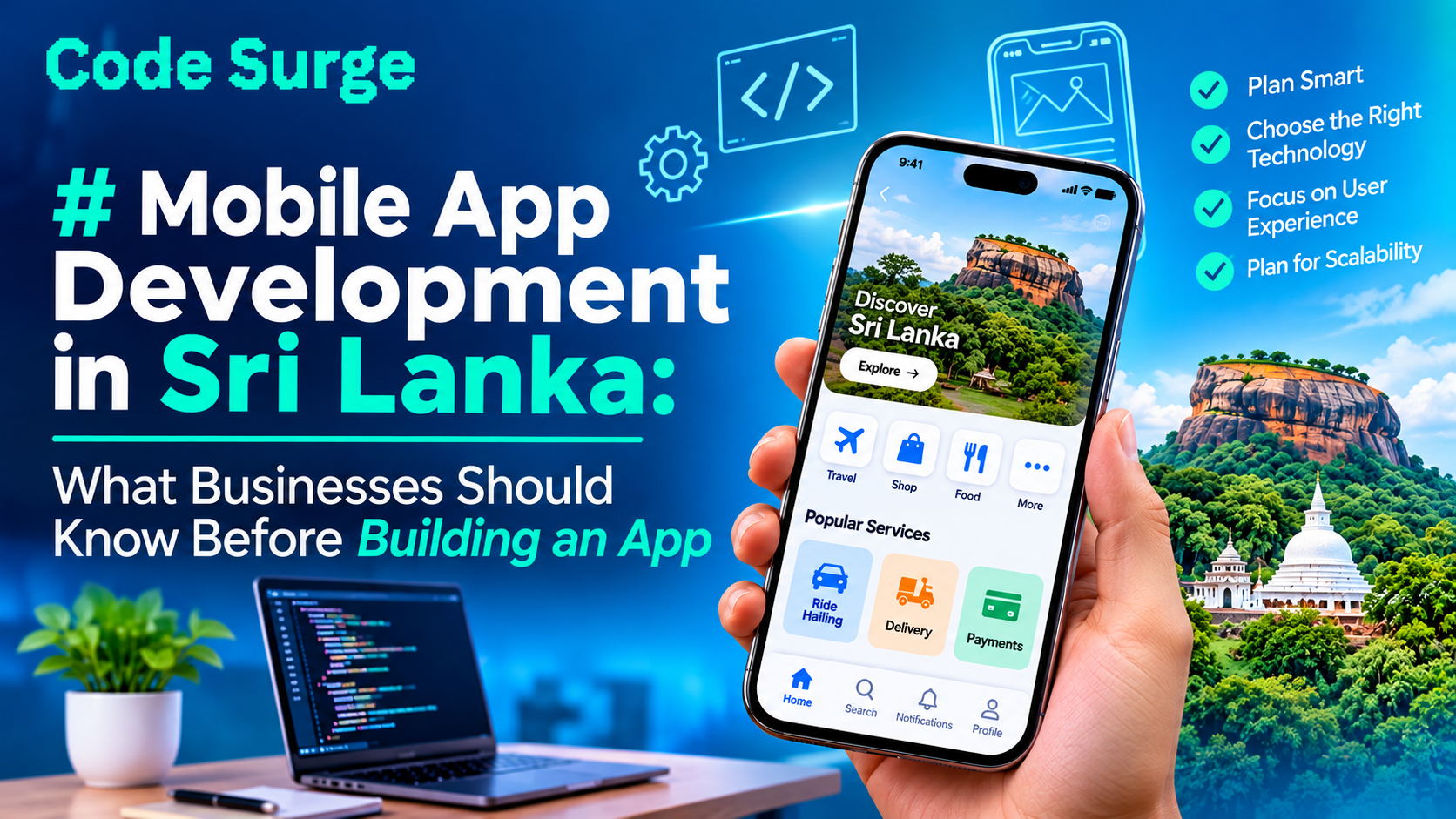
Mobile apps have become an important part of how businesses connect with customers, deliver services and manage day-to-day operations. From e-commerce and banking to education, healthcare, travel and delivery services, a well-designed mobile application can make it easier for customers to interact with a business.
However, building an app is more than simply creating a few screens and publishing it on an app store. Businesses need to consider the purpose of the application, target users, features, user experience, security, technology, scalability and long-term maintenance before development begins.
For businesses looking for mobile app development in Sri Lanka, understanding these factors can help turn an app idea into a practical digital product that supports real business goals.
What Is Mobile App Development?
Mobile app development is the process of designing, developing, testing and maintaining applications for mobile devices such as smartphones and tablets.
Depending on the business requirements, an application may be developed for:
-
Android devices
-
iOS devices
-
Both Android and iOS
-
Cross-platform environments
-
Business-specific mobile systems
A mobile application can be built for many different purposes, including online shopping, bookings, payments, customer support, education, logistics, employee management and customer loyalty.
The right approach depends on what the business wants the application to achieve and who will use it.
Why Are Mobile Apps Important for Businesses?
Customers increasingly expect businesses to provide convenient and accessible digital experiences. A mobile application can provide a more direct way for customers to interact with a brand compared with relying only on a website.
Some common business benefits of mobile applications include:
1. Better Customer Experience
A mobile app can provide customers with a convenient way to access products, services, accounts or information from their smartphones.
For example, an e-commerce business can allow customers to browse products, add items to a cart, make payments and track orders through one application.
2. Direct Customer Engagement
Mobile applications can provide businesses with another channel for communicating with customers.
Depending on the application, businesses can use features such as push notifications, in-app messages, loyalty programmes and personalised offers to keep customers engaged.
3. Easier Access to Business Services
An app can bring several business services together in one place.
For example, a service-based company could allow customers to book appointments, make payments, check booking details and contact support without switching between different platforms.
4. Improved Business Operations
Mobile applications are not only useful for customers.
Businesses can also develop internal applications for employees, sales teams, delivery staff, field workers and management teams.
These applications can help businesses collect information, manage tasks, monitor operations and access important data while working remotely or in the field.
What Should Businesses Consider Before Building a Mobile App?
Before contacting a mobile app development company, it is important to clearly define what the application needs to achieve.
Here are some of the most important factors to consider.
1. Define the Purpose of Your App
The first question should not be "How much does an app cost?"
Instead, ask:
What problem will this application solve?
A successful mobile application should have a clear purpose.
For example, the goal could be to:
-
Increase online sales
-
Improve customer service
-
Simplify bookings
-
Provide online payments
-
Manage deliveries
-
Improve employee productivity
-
Build customer loyalty
-
Provide access to business information
-
Automate a manual process
Once the main purpose is clear, it becomes easier to decide which features are actually necessary.
2. Understand Your Target Users
A mobile application should be designed around the people who will use it.
Businesses should understand:
-
Who their users are
-
What devices they use
-
What problems they face
-
What they expect from the application
-
How often they will use it
-
What actions they need to complete
For example, an application designed for delivery drivers may need location tracking, route information and status updates, while an e-commerce application may need product search, shopping carts, payments and order tracking.
Understanding the target audience before development can prevent unnecessary features and improve the overall user experience.
3. Choose Between Android, iOS or Cross-Platform Development
One of the biggest decisions in mobile application development is choosing the technology and platforms.
Android App Development
Android applications can reach a wide range of smartphone users and devices.
Businesses targeting Android users may need to consider different screen sizes, device specifications and operating system versions during development and testing.
iOS App Development
iOS applications are designed for Apple's ecosystem, including iPhone and iPad devices.
Businesses targeting iOS users need to consider Apple's design standards, device compatibility and App Store requirements.
Cross-Platform App Development
Cross-platform development allows businesses to build applications that work across multiple platforms using a shared development approach.
This can be useful when a business wants to launch on both Android and iOS while maintaining a more unified development process.
The best choice depends on the target audience, application requirements, development budget and long-term product strategy.
4. Plan the Core Features
It can be tempting to add every possible feature to a new application.
However, more features do not automatically mean a better product.
Businesses should identify the features that are essential to solving the user's main problem.
Depending on the type of application, these could include:
-
User registration and login
-
Profile management
-
Product or service listings
-
Search and filters
-
Online payments
-
Booking systems
-
Push notifications
-
Location services
-
Chat or customer support
-
Order tracking
-
Reviews and ratings
-
Analytics
-
Admin dashboards
-
API integrations
Starting with the most important features can make development more manageable and allow businesses to test the product before adding more advanced functionality.
5. Focus on UI/UX Design
Good mobile app development is not only about functionality. The application should also be easy to understand and use.
A good mobile UX should make it clear:
-
Where users are
-
What they can do next
-
How they can complete an action
-
Where they can find important information
-
How they can recover from an error
Navigation, buttons, forms, colours, typography and page layouts should work together to create a smooth experience.
For businesses, investing in UI/UX design before development can help reduce usability problems later in the project.
6. Think About Security From the Beginning
Mobile applications may handle sensitive information such as customer details, account information, payment data and business records.
Security should therefore be considered during the planning and development stages rather than added as an afterthought.
Depending on the application, security considerations may include:
-
Secure authentication
-
Data encryption
-
Secure API communication
-
Access controls
-
Secure payment integration
-
Session management
-
Regular security testing
-
Secure database management
A professional mobile application development company should consider security throughout the development lifecycle.
7. Consider Integrations and APIs
Many modern mobile applications need to communicate with other systems.
For example, an application may need to connect with:
-
Payment gateways
-
CRM systems
-
E-commerce platforms
-
Inventory systems
-
Maps and location services
-
Accounting software
-
Customer databases
-
Analytics platforms
-
Cloud services
APIs make it possible for different systems to communicate with each other.
This is particularly important for businesses that already have websites, software or backend systems and want their new mobile application to work with existing infrastructure.
8. Make the App Scalable
A mobile application may initially have a small number of users.
But what happens if the business grows?
The application should be designed with future growth in mind.
Scalability can involve:
-
Backend architecture
-
Database design
-
Cloud infrastructure
-
API performance
-
Server capacity
-
Application performance
-
Security
-
Third-party integrations
Planning for scalability early can help reduce the need for expensive redevelopment when the number of users or transactions increases.
9. Test Before Launch
Testing is one of the most important stages of mobile app development services.
An application should be tested across relevant devices, screen sizes and operating system versions.
Testing can include:
-
Functional testing
-
Usability testing
-
Performance testing
-
Security testing
-
Compatibility testing
-
API testing
-
Payment testing
-
User acceptance testing
Testing should not only focus on whether the application works. It should also identify confusing user journeys, slow pages, crashes and other issues that could affect the customer experience.
10. Plan for App Maintenance
Launching an application is not the end of development.
Mobile operating systems change, devices change and user expectations evolve. Businesses may also need new features as they grow.
Ongoing app maintenance may include:
-
Bug fixes
-
Security updates
-
Performance improvements
-
Operating system compatibility
-
Feature updates
-
API updates
-
Database maintenance
-
User experience improvements
Businesses should consider ongoing maintenance when planning their mobile application budget and development strategy.
How Much Does Mobile App Development Cost in Sri Lanka?
There is no single fixed price for developing a mobile application.
The cost can vary significantly depending on factors such as:
-
Number of platforms
-
App complexity
-
Number of features
-
UI/UX requirements
-
Backend development
-
API integrations
-
Payment gateway integration
-
Third-party services
-
Security requirements
-
Testing requirements
-
Ongoing maintenance
A simple business application will generally require a different level of development effort from a large e-commerce platform, financial application or enterprise system.
Instead of choosing an app development provider based only on the lowest price, businesses should consider the application's requirements, technical quality, scalability, security and long-term support.
How to Choose a Mobile App Development Company in Sri Lanka
Choosing the right development partner can have a major impact on the final product.
Before selecting a mobile app development company in Sri Lanka, businesses should consider:
Technical Experience
Look at the technologies, platforms and types of applications the development team works with.
Portfolio
Review previous projects to understand the team's experience with similar applications.
Development Process
Ask how the team handles requirements, design, development, testing and deployment.
Communication
Clear communication is important throughout the development process, particularly when requirements change.
Security and Scalability
Ask how the development team approaches application security, data protection and future scalability.
Post-Launch Support
Find out whether the company provides maintenance, updates and technical support after the application is launched.
Why Work With Code Surge for Mobile App Development?
Choosing an experienced development partner can make the process easier from the initial idea through to launch and ongoing improvements.
At Code Surge, mobile solutions are part of the company's broader digital development services. The company provides mobile solutions designed for both iOS and Android platforms, alongside web and custom digital solutions.
If you're planning a new application, you can explore Code Surge's mobile application development services to understand how the team approaches mobile solutions.
You can also explore the Code Surge homepage to learn more about its wider web, mobile and digital solutions.
For businesses that want to understand the team and its experience, the About Code Surge page provides more information about the company and its client-focused approach.
If you're interested in the technologies and development capabilities behind your project, you can also explore the Code Surge technology solutions.
Frequently Asked Questions About Mobile App Development
How long does it take to develop a mobile app?
The development time depends on the application's complexity, number of features, platforms, integrations and testing requirements. A simple application may take considerably less time than a complex business platform with multiple integrations and backend systems.
How much does it cost to develop an app in Sri Lanka?
Mobile app development costs in Sri Lanka vary depending on the features, technology, platforms, UI/UX requirements, integrations and development scope. A detailed project assessment is usually required before providing an accurate estimate.
Should I build an Android or iOS app first?
This depends on your target customers, business objectives and market. Businesses should analyse their target audience and device usage before deciding which platform to prioritise.
Is cross-platform app development a good option?
Cross-platform development can be suitable for businesses that want to support multiple platforms while using a shared development approach. However, the right technology depends on the application's functionality and technical requirements.
Do I need a mobile app if I already have a website?
Not always. A website may be sufficient for some businesses. A mobile app becomes more useful when customers need frequent access to specific services, personalised experiences, notifications, mobile features or account-based functionality.
Can a mobile app connect to an existing website or software?
Yes. Mobile applications can often connect with existing websites, databases and business systems through APIs and backend services. The exact approach depends on the existing technology infrastructure.
Final Thoughts
Building a mobile application is a significant investment, so businesses should focus on solving a real customer or operational problem rather than developing an app simply because mobile apps are popular.
Before starting mobile application development, define your business objective, understand your users, choose the right technology, plan essential features, prioritise UI/UX and security, and consider scalability and long-term maintenance.
For businesses looking for mobile app development in Sri Lanka, the right development partner can help turn an initial idea into a secure, scalable and user-friendly digital product.
If you already have an app idea, you can contact Code Surge to discuss your project requirements and explore the next steps.