
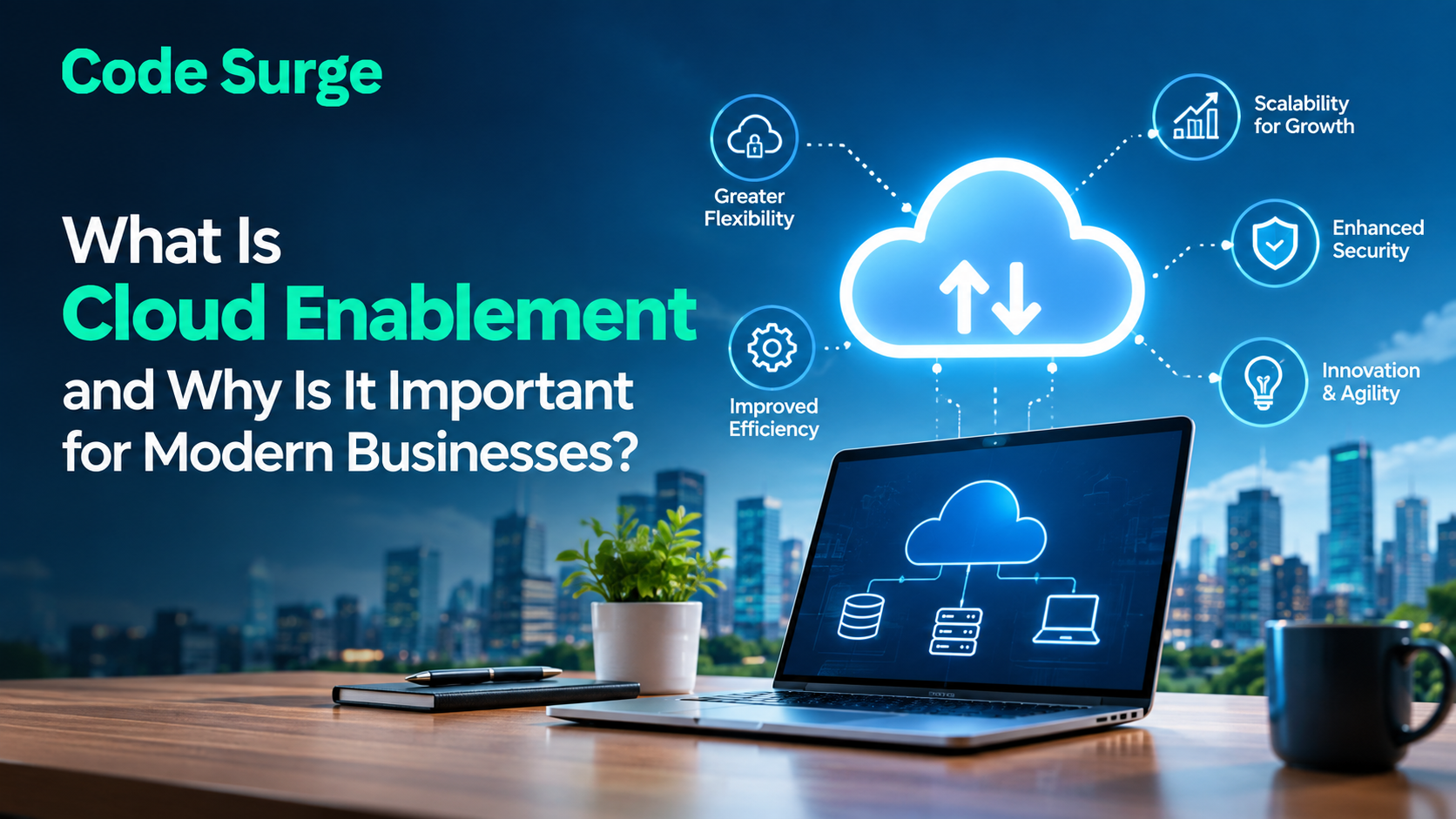
Cloud technology has become an important part of modern business infrastructure. From websites and mobile applications to databases, business software, analytics platforms and AI applications, organizations increasingly rely on cloud computing to run and scale their digital operations.
But moving a business to the cloud is more than simply transferring files or applications from a physical server to a cloud platform. Businesses need the right infrastructure, security controls, architecture, processes and operational approach to get long-term value from cloud technology.
This is where cloud enablement comes in.
Cloud enablement helps businesses prepare, migrate, modernize and manage their technology environments so they can take advantage of cloud computing while improving scalability, flexibility, security and operational efficiency.
For businesses looking for cloud solutions in Sri Lanka or planning to modernize their existing IT infrastructure, understanding cloud enablement is an important first step.
What Is Cloud Enablement?
Cloud enablement is the process of preparing an organization's technology, infrastructure, people and processes to effectively adopt and use cloud computing.
It can involve several activities, including:
-
Cloud readiness assessment
-
Cloud migration
-
Cloud infrastructure setup
-
Application modernization
-
Database migration
-
Cloud security
-
Data storage and backup
-
Infrastructure optimization
-
Cloud monitoring
-
Automation
-
Scalability planning
-
Cloud governance
Unlike a simple cloud migration, cloud enablement focuses on creating an environment where a business can continue using, managing and scaling cloud technologies effectively after migration.
AWS describes cloud enablement through capabilities such as operations, security and control, platform architecture, governance and infrastructure provisioning.
Cloud Enablement vs Cloud Migration: What's the Difference?
These terms are often used together, but they don't mean exactly the same thing.
Cloud migration
Cloud migration generally refers to moving applications, databases, workloads or other IT resources from on-premises infrastructure or another environment into the cloud.
For example, a company may migrate:
-
A website
-
Business applications
-
Databases
-
File storage
-
Virtual servers
-
Backup systems
Cloud migration can also include moving workloads between cloud providers or modernizing applications during migration.
Cloud enablement
Cloud enablement has a broader focus.
It can include migration, but it also considers:
-
How the cloud environment will be managed
-
How applications will scale
-
How cloud security will be implemented
-
How infrastructure will be monitored
-
How costs will be controlled
-
How teams will work with cloud technologies
-
How future applications and workloads can use the cloud
Therefore, cloud migration can be one part of a wider cloud enablement strategy.
Why Is Cloud Enablement Important for Businesses?
Businesses don't adopt cloud technology simply because it is a modern technology. The goal is usually to solve specific technology and business challenges.
Here are some of the key benefits of cloud enablement.
1. Improved Scalability
Traditional infrastructure often requires businesses to purchase additional hardware when demand increases.
Cloud infrastructure can provide greater flexibility by allowing organizations to adjust computing resources according to workload requirements.
This can be particularly useful for:
-
E-commerce businesses
-
SaaS companies
-
Online platforms
-
Financial applications
-
Mobile applications
-
High-traffic websites
Cloud scalability allows businesses to respond to changing demand without relying entirely on physical infrastructure.
2. Better Business Agility
Modern businesses need to launch products, update applications and respond to changing customer requirements quickly.
Cloud technologies can support faster development, testing and deployment processes.
Cloud environments can also make it easier for development teams to create consistent environments and automate parts of infrastructure management. AWS notes that cloud-based automation can reduce human error and support more predictable changes.
This can help businesses become more responsive without constantly rebuilding their infrastructure.
3. Improved Business Continuity
Unexpected hardware failures, system outages and data loss can disrupt business operations.
A properly designed cloud environment can support:
-
Automated backups
-
Disaster recovery
-
Data redundancy
-
High availability
-
System monitoring
-
Recovery planning
Microsoft's cloud adoption guidance identifies business continuity, disaster recovery, resilience and availability among common objectives for cloud adoption.
However, simply moving to the cloud does not automatically guarantee business continuity. The architecture, backup strategy and recovery processes still need to be designed correctly.
4. Stronger Cloud Security
Security is one of the most important considerations when adopting cloud technology.
A cloud enablement strategy can include security measures such as:
-
Identity and access management
-
Encryption
-
Network security
-
Security monitoring
-
Backup protection
-
Access controls
-
Compliance policies
-
Vulnerability management
Cloud security should be considered from the beginning of a cloud migration or modernization project rather than added later.
5. More Efficient IT Operations
Cloud platforms can reduce the amount of manual infrastructure management required for certain workloads.
Businesses can use automation, managed services, monitoring tools and centralized infrastructure management to improve operational efficiency.
This allows IT teams to spend less time dealing with repetitive infrastructure tasks and more time working on business-focused technology initiatives.
6. Support for Application Modernization
Many businesses still rely on older applications that were designed for traditional infrastructure.
Simply moving an old application to the cloud may not provide all the advantages of modern cloud architecture.
Cloud modernization can involve:
-
Refactoring applications
-
Using containers
-
Modernizing databases
-
Implementing APIs
-
Automating deployments
-
Using cloud-native services
-
Improving application architecture
AWS describes application modernization as part of the broader process of transforming legacy applications to take advantage of modern cloud capabilities.
What Does a Cloud Enablement Strategy Include?
A successful cloud enablement strategy should be aligned with the organization's business and technology objectives.
A typical process can include the following stages.
1. Cloud Readiness Assessment
Before migrating workloads, businesses should understand their current technology environment.
This can include reviewing:
-
Existing servers
-
Applications
-
Databases
-
Storage
-
Network infrastructure
-
Security
-
Performance requirements
-
Business-critical systems
This assessment helps determine which workloads are suitable for cloud migration and what preparation may be required.
2. Cloud Architecture Planning
The next step is designing an appropriate cloud architecture.
The architecture should consider:
-
Scalability
-
Performance
-
Security
-
Availability
-
Data management
-
Application requirements
-
Disaster recovery
-
Future growth
A well-planned architecture can help prevent businesses from simply moving existing infrastructure into the cloud without addressing underlying technical limitations.
3. Cloud Migration
Once the strategy and architecture are defined, workloads can be migrated.
Depending on the business requirements, migration approaches can include:
-
Rehosting
-
Replatforming
-
Refactoring
-
Repurchasing
-
Retaining
-
Retiring
The appropriate approach depends on the application's technical condition, business importance, cost and modernization requirements.
4. Application and Infrastructure Modernization
Some applications may need to be redesigned or optimized after migration.
This can involve modern technologies such as:
-
Containers
-
APIs
-
Serverless computing
-
Cloud databases
-
Infrastructure as Code
-
CI/CD pipelines
-
Automated monitoring
Modernization can help businesses make better use of cloud capabilities instead of simply hosting legacy systems on cloud infrastructure.
5. Security and Governance
Cloud environments need appropriate security and governance policies.
Organizations should define:
-
Who can access resources
-
How sensitive data is protected
-
How infrastructure changes are controlled
-
How cloud resources are monitored
-
How compliance requirements are handled
AWS recommends organizational capabilities around governance, security, operations and architecture as part of successful cloud adoption.
6. Monitoring and Optimization
Cloud enablement doesn't end after migration.
Businesses should continuously monitor:
-
Application performance
-
Infrastructure usage
-
Security events
-
Availability
-
Resource utilization
-
Cloud costs
Regular optimization can help organizations make sure their cloud environment continues to support their business requirements.
When Should a Business Consider Cloud Enablement?
Cloud enablement may be worth considering when a business is experiencing challenges such as:
-
Growing website or application traffic
-
Outdated IT infrastructure
-
Increasing server maintenance costs
-
Limited infrastructure scalability
-
Frequent downtime
-
Difficult backup and recovery processes
-
Slow application deployment
-
Increasing data requirements
-
Expansion into new markets
-
Need for modern application architecture
It can also be useful for businesses planning digital transformation, application modernization or the development of new cloud-based products.
Cloud Enablement for Sri Lankan Businesses
For businesses in Sri Lanka, cloud technology can provide access to infrastructure and services that support modern digital operations without requiring every organization to build and maintain extensive physical infrastructure.
This can be relevant for:
-
Sri Lankan SMEs
-
E-commerce companies
-
Software companies
-
Financial businesses
-
Education providers
-
Hospitality businesses
-
Healthcare organizations
-
Professional service companies
-
Startups
For example, a growing Sri Lankan e-commerce company may need infrastructure that can handle increased traffic during seasonal campaigns. A cloud-based architecture can provide greater flexibility than relying entirely on fixed physical infrastructure.
The right approach will depend on the company's applications, data, budget, security requirements and long-term growth plans.
How to Choose Cloud Enablement Services
When comparing cloud enablement services, businesses should look beyond the cloud platform itself.
Consider whether the technology partner can support:
-
Cloud readiness assessment
-
Cloud architecture
-
Cloud migration
-
Application modernization
-
Cloud security
-
Data migration
-
Infrastructure management
-
Monitoring and optimization
-
Backup and disaster recovery
-
Long-term cloud strategy
A good cloud strategy should be connected to business objectives rather than focusing only on moving existing systems to a cloud platform.
Why Work With a Cloud Technology Partner?
Cloud projects can involve infrastructure, software development, security, databases, networking and ongoing operations.
For businesses without a dedicated cloud engineering team, working with an experienced technology partner can help reduce the complexity involved in planning and implementing a cloud environment.
Code Surge provides digital technology solutions for businesses, with services covering areas such as web development, mobile applications, SEO and other technology solutions. The company works with local businesses and international clients.
If your business is planning cloud migration, application modernization or a scalable cloud infrastructure, you can explore Code Surge's Cloud Enablement services to understand how the service can support your technology requirements.
Frequently Asked Questions About Cloud Enablement
What is cloud enablement?
Cloud enablement is the process of preparing and supporting a business to adopt, operate and scale cloud technologies effectively. It can include cloud migration, architecture, security, modernization, governance and ongoing optimization.
What is the difference between cloud enablement and cloud migration?
Cloud migration focuses primarily on moving applications, data or workloads to the cloud. Cloud enablement has a broader focus that can include migration, architecture, security, governance, modernization and ongoing cloud operations.
What are the benefits of cloud enablement?
Common benefits include improved scalability, greater business agility, improved operational efficiency, stronger resilience, application modernization and better use of cloud infrastructure.
Is cloud enablement suitable for small businesses?
Yes. Small and medium-sized businesses can use cloud technologies for applications, websites, storage, databases and other workloads. The appropriate cloud architecture depends on the business's requirements, budget and growth plans.
Does cloud enablement improve cloud security?
Cloud enablement can incorporate security architecture, identity management, access controls, encryption, monitoring and governance. However, security depends on how the cloud environment is designed, configured and managed.
How long does cloud migration take?
There is no single timeframe for every business. Migration time depends on the number of workloads, application complexity, data volume, infrastructure and modernization requirements.
Conclusion
Cloud enablement is about more than moving business systems from physical servers to the cloud. It is about creating a secure, scalable and manageable technology environment that supports long-term business objectives.
From cloud migration and application modernization to cloud security, infrastructure management and optimization, a structured approach can help businesses make better use of cloud computing.
For businesses considering their next stage of digital transformation, the first step is understanding the existing technology environment and identifying which cloud strategy best matches their goals.
Interested in modernizing your business infrastructure?
Explore Code Surge's Cloud Enablement service or contact the Code Surge team to discuss your requirements.