
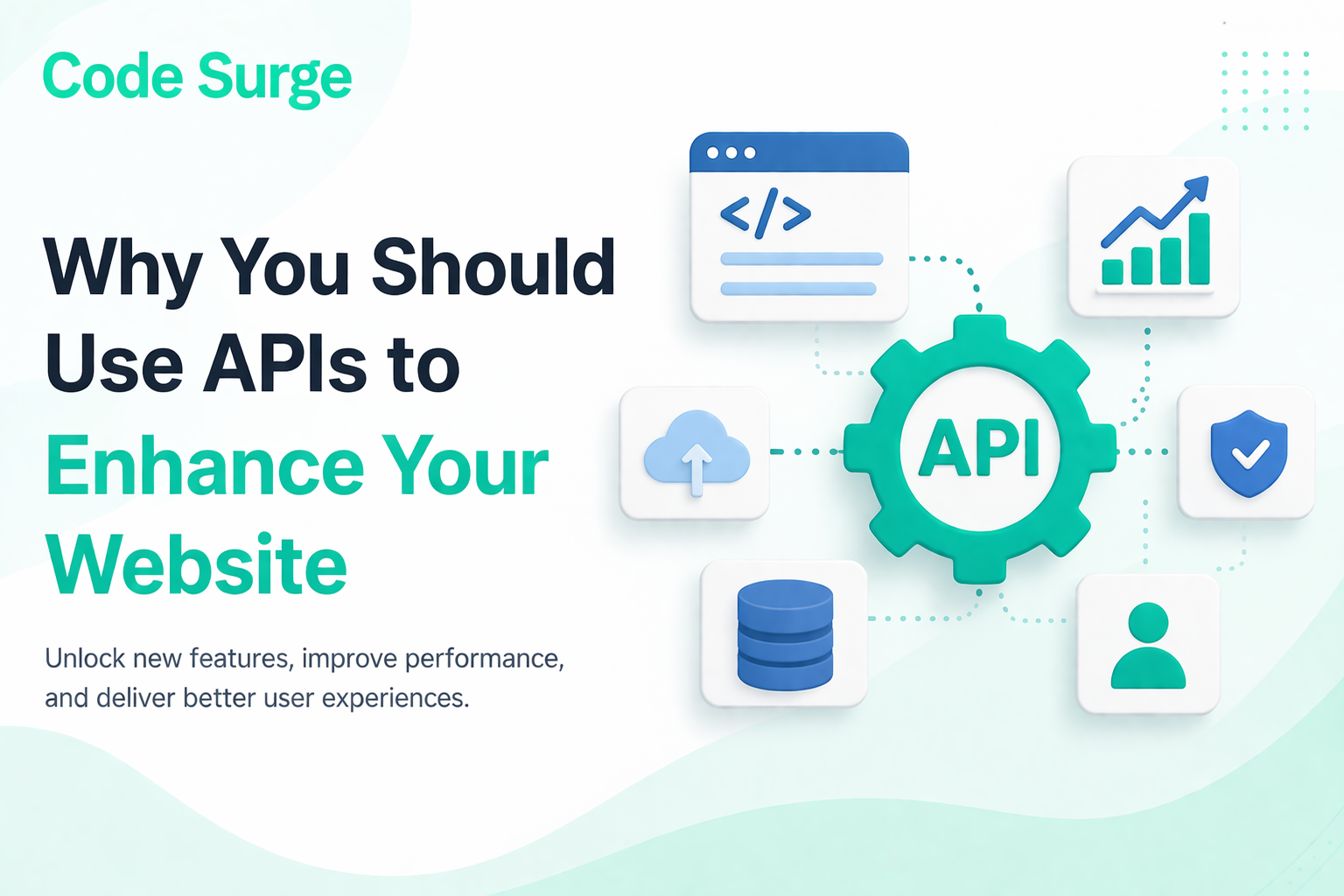
Every feature you see on a modern website, whether it's a login page, a payment form, an interactive map, or a dashboard filled with analytics relies on APIs working behind the scenes. APIs, which are called Application Programming Interfaces, allow different software systems to talk to each other. But why are they such a big deal in web development today? The short answer is, they save time, reduce complexity, and make your application stronger, faster and more reliable.
At Code Surge Global, we leverage modern API integration, custom web development and scalable software solutions to build high-performance websites that meet global standards.
Why Use APIs in Your Web Projects
Using APIs in your web projects lets you add powerful features without having to build everything from scratch. For example, instead of building your own payment system, you can use the Stripe API, which is already trusted by thousands of businesses and includes built-in security and compliance features. These services have already solved the hard problems, and they offer ready to use, secure, and well supported tools that developers can plug into any project.
At Code Surge, our expertise in API integration services, enterprise web development, and secure software solutions ensures that your business benefits from reliable and scalable technologies without unnecessary development costs.
Another reason APIs are so useful is that they help maintain consistency across multiple platforms. A single API can power a website, a mobile app, and even smart devices or chatbots simultaneously. This unified approach saves development time while keeping the user experience consistent.
With Code Surge Global’s web development services, businesses can achieve cross-platform compatibility, cloud-based scalability and high-performance web applications that grow alongside their needs.
As your business expands, APIs allow your application to scale smoothly. Instead of rebuilding your entire system, you can scale specific components such as user authentication, payment systems or data processing independently. This is a key advantage in scalable web application development and cloud-native architecture.
Building Faster with APIs
Building with APIs significantly speeds up the development process. When developers don’t have to manage complex systems like payment gateways or authentication frameworks, they can focus on creating unique and user-focused features.
At Code Surge, we specialize in custom software development, API-driven architecture and agile development methodologies, helping businesses launch faster and deliver better digital experiences.
This results in:
-
Faster product launches
-
Improved user experience (UX/UI design)
-
More efficient development cycles
-
Better focus on innovation
APIs That Supercharge Websites & Apps
Here are some of the most impactful APIs that can elevate your digital experience:
• Stripe API – Enables secure, scalable payment processing ideal for e-commerce and subscription models.
• Spotify API – Lets developers integrate music streaming features, playlists, album data, and playback control into web or mobile apps, ideal for entertainment, media, or lifestyle platforms.
• Google Maps API – Powers dynamic maps, geolocation, and routing for web and mobile users.
• Twilio API – Adds robust SMS, voice, and notification capabilities without complex infrastructure.
• Analytics/SEO APIs – The Google Search Console API, for example, delivers valuable insights into site performance, indexing, and search trends directly to your backend systems.
At Code Surge, we carefully select and integrate these APIs to deliver high-performance websites, SEO-friendly web solutions and enterprise grade applications.
Choosing the Right APIs
When selecting APIs, it’s important to consider reliability, scalability, and security. You need APIs that can handle high traffic, offer clear documentation, and follow modern security protocols such as HTTPS and OAuth.
At Code Surge, we ensure all integrations follow best practices in cybersecurity, data protection, and secure API development, helping businesses avoid risks while maximizing performance.
It’s also important to evaluate pricing models to avoid unexpected costs, especially when scaling your application. Our team helps clients choose cost-effective API solutions aligned with their business goals.
Conclusion
In the end, integrating APIs into your project is one of the best ways to build faster, smarter and more efficient web applications. They enable powerful features, support business growth and allow developers to focus on delivering exceptional user experiences.
With expert support from Code Surge Global, businesses can leverage advanced API integration, custom web development services and scalable digital solutions to stay competitive in today’s digital landscape.
Without APIs, building a modern web product becomes slow and complex. But with the right APIs and the right development partner, you can set your project up for long-term success.